Note: This content is for informational purposes only. Please read our full disclaimer for more details.
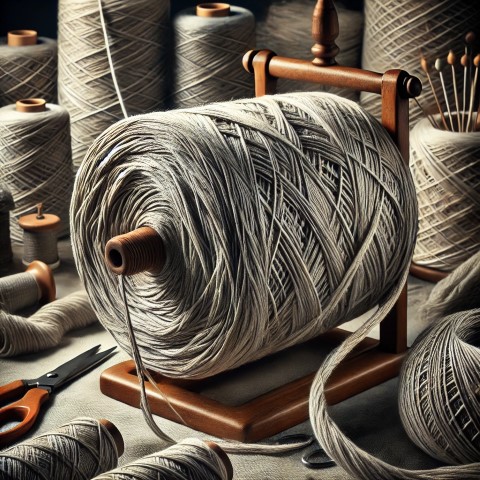
Folded yarn, also called cabled yarn, is created by twisting plied yarns together again in a specific direction. This double-twisting process adds extra durability and stability compared to standard plied yarn. The folding technique balances the twist, which enhances resistance to untwisting during use.
Unlike regular plied yarn, folded yarn offers a smoother surface and tighter structure, which makes it ideal for projects that need high strength and longevity, such as socks, bags, and heavy garments. It also provides excellent stitch definition, showcasing intricate patterns in knitwear and crochet projects.
Folded yarn can be made using a range of natural and synthetic fibers. Wool is a popular choice due to its elasticity and softness, making it perfect for garments that need stretch and warmth. Cotton and silk are used for projects where smoothness and sheen are essential, such as high-end garments and accessories.
Synthetic fibers like nylon and polyester also appear in folded yarns, especially when additional durability and abrasion resistance are needed. These blended options create versatile materials suitable for everything from athletic wear to industrial textiles.
Twist direction plays a crucial role in the strength and feel of folded yarn. A typical setup involves spinning the initial strands in one direction (like a Z-twist) and plying them in the opposite direction. Folding them again in the original direction (S-twist) enhances the yarn’s stability and prevents unraveling.
This double-twist system creates a more balanced and durable yarn, which makes folded yarn less likely to pill or wear out over time. The balanced twist also improves the elasticity of the yarn, giving it better performance in both knitted and woven fabrics.
Folded yarn offers several key benefits over single-ply yarn. Its added twist increases strength and resistance to pilling, making it ideal for items exposed to regular use, such as socks and bags. The structured nature of folded yarn also provides better control and uniformity in knitting, which is especially useful for complex stitch patterns.
Single-ply yarn, by contrast, tends to be softer and more prone to wear. Folded yarn’s additional durability makes it a preferred choice for projects requiring longevity, such as outdoor garments or home décor items.
Yes, folded yarn is often recommended for beginners because its multiple plies provide better grip and control, reducing the chances of dropped stitches. The tighter structure helps prevent tangling, making it easier to handle compared to single-ply yarns.
Additionally, folded yarn produces consistent stitch tension, which is ideal for learners trying to develop even knitting or crochet skills. Its durability also allows beginners to unravel and rework stitches without significantly damaging the yarn.
Folded yarn’s compact and smooth surface enhances stitch clarity, which is critical for showcasing intricate patterns like cables or lace. The balanced twist minimizes bias in the fabric, allowing the stitches to remain even and distinct.
This makes folded yarn especially popular for textured knitting projects that rely on precise stitch placement to create visually striking designs. Whether used in garments or accessories, the enhanced stitch definition ensures a polished, professional look.
One challenge with folded yarn is that its firm structure can make it feel less flexible, which might be challenging for projects requiring a softer drape. Additionally, the added twist means it can be more difficult to block into shape, especially for delicate lacework.
However, these issues can be mitigated by choosing the right fiber blend. For instance, adding silk to wool-based folded yarn increases softness, while polyester can enhance durability without compromising flexibility.
Folded yarn is highly valued across various industries for its durability and versatility. In fashion, it is often used in socks, mittens, and activewear, where abrasion resistance is crucial. In home textiles, folded yarn appears in rugs and cushion covers, providing long-lasting wear.
The industrial sector also benefits from folded yarn’s strength and stability. It is used in heavy-duty fabrics for upholstery, ropes, and outdoor gear, ensuring products withstand intense use while retaining their performance.
Consistency is key in folded yarn manufacturing, and advanced spinning techniques are employed to maintain even twist across the entire length. Modern spinning equipment allows for precise control of tension and speed during both the initial spinning and the folding processes.
Some manufacturers also use computerized monitoring systems to detect inconsistencies in twist direction or tension, ensuring each skein meets quality standards. This consistency guarantees that the final product will perform reliably across multiple applications.
Several leading yarn manufacturers offer premium folded yarns. Berroco, for instance, provides a variety of folded yarns designed for knitwear and accessories. Cascade Yarns is another popular choice, known for its durable and colorful yarns suitable for both beginners and experienced crafters.
Lion Brand Yarn also offers affordable folded yarn options, making it accessible to hobbyists and professionals alike. These brands focus on providing high-quality products that meet the diverse needs of knitters, crocheters, and textile manufacturers alike.
Embossing is a technique used in textiles to create a raised or three-dimensional pattern on a surface. It is achieved by pressing a design into the surface of a material using heat and pressure,...
Read about Embossing
A crease resist finish is a chemical treatment applied to fabrics that helps prevent creasing and wrinkling. The finish is designed to create a smoother, more wrinkle-free fabric, which can be...
Read about Crease-Resist Finish
Garment Wash is a textile finishing process that involves washing and treating garments to achieve specific aesthetic and functional effects. It is a crucial step in the production of various types...
Read about Garment Washed
Coif: A Comprehensive Exploration of Its Historical and Cultural Significance The coif is a closely fitted cap that has been worn by men, women, and children throughout history, particularly during...
Read about coif