Share on X
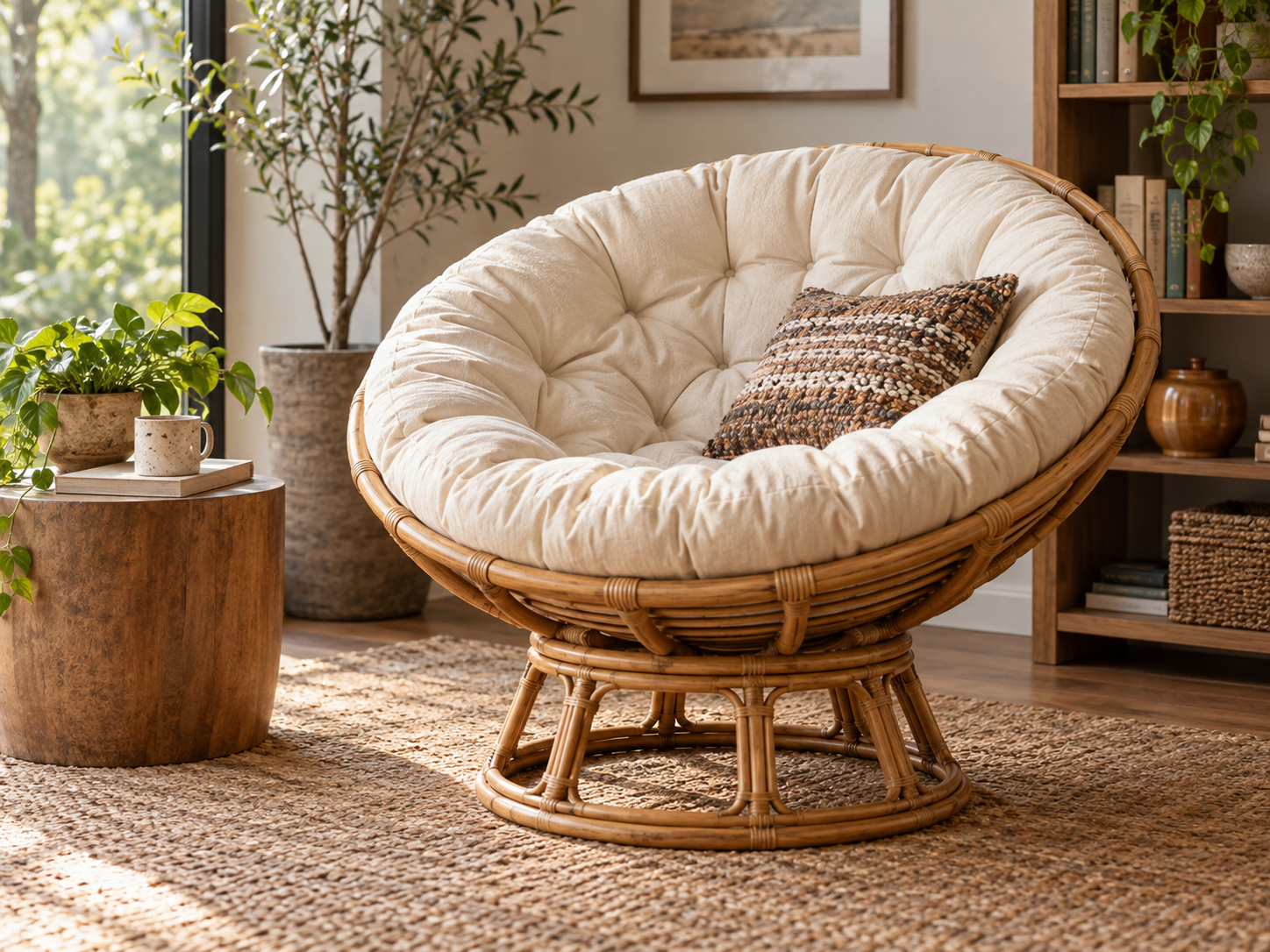
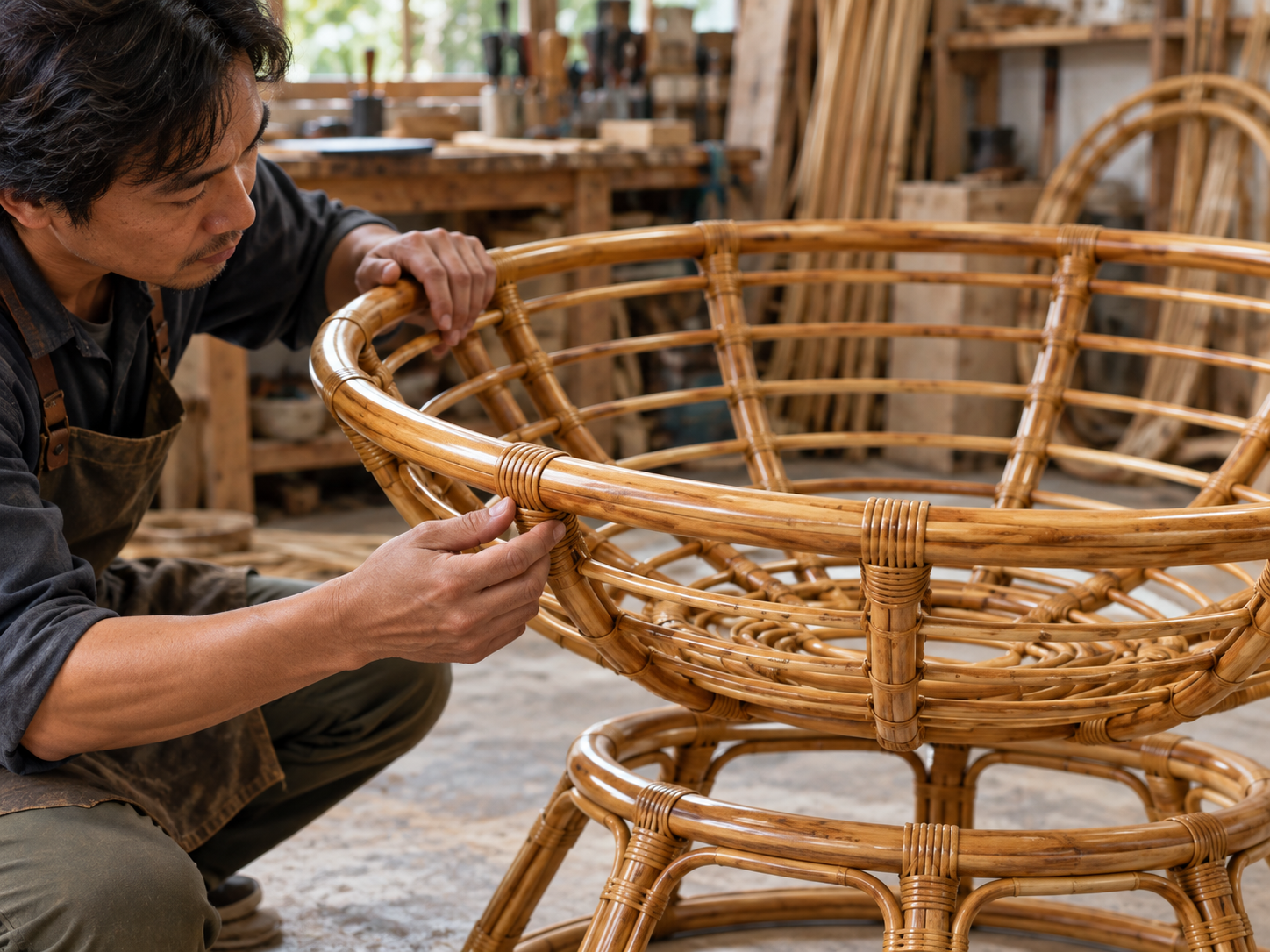
The papasan chair is a distinctive type of lounge seating recognized by a broad, concave, bowl-shaped seat, a supporting base and a generously padded cushion. Unlike a conventional armchair with separate back, arms and seat, its continuous curved frame produces an enveloping place to recline. Associated with Southeast Asian rattan craftsmanship, the chair illustrates how traditional materials and curved construction entered international furniture markets. Modern interpretations use metal and synthetic materials, and their quality depends on much more than appearance. Seat geometry, frame joints, load transfer, cushion support, stability, care and replacement-part compatibility all affect how a papasan works in everyday use.
What Defines a Papasan Chair?
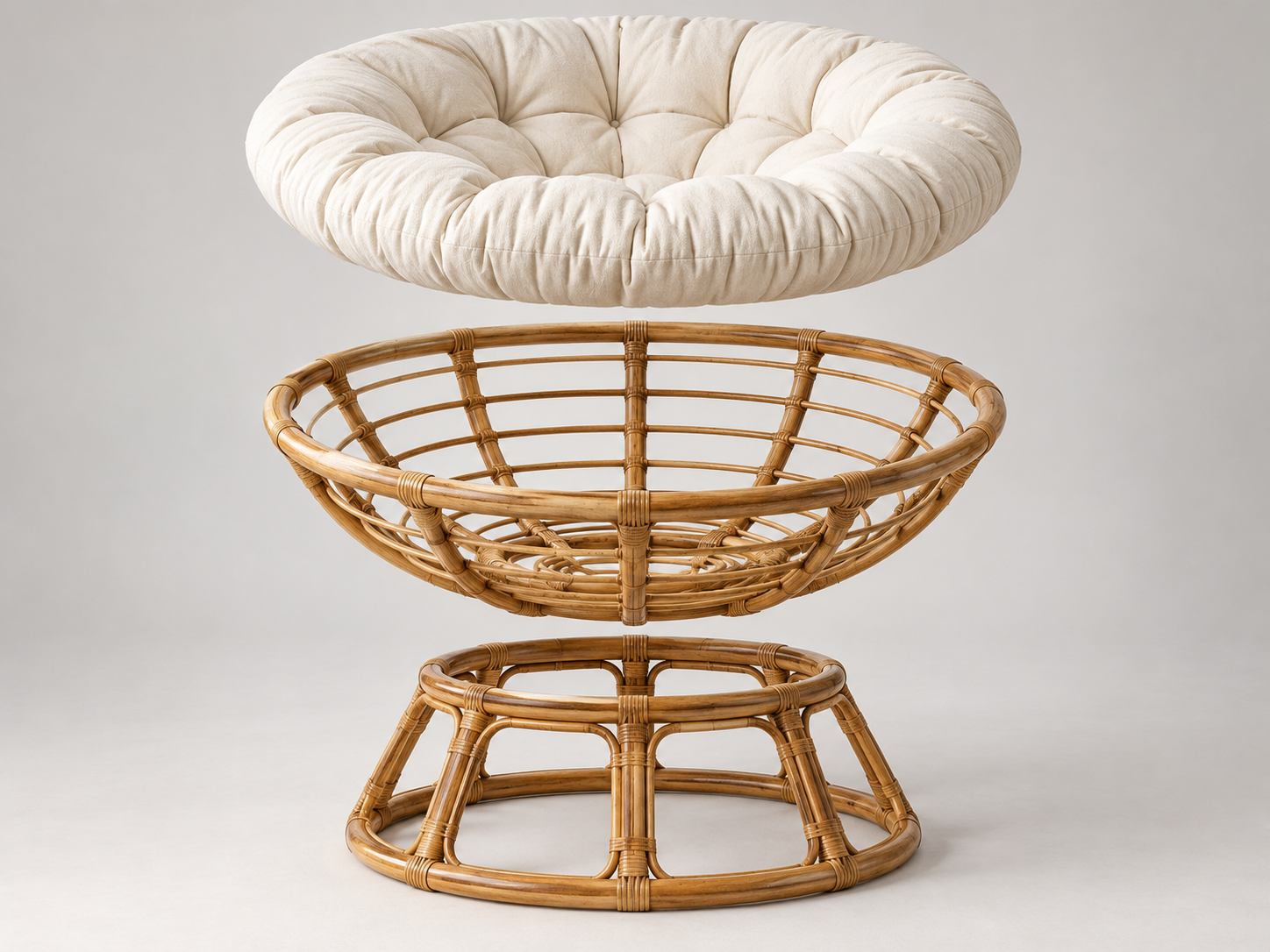
A papasan chair is a low, rounded lounge chair with a concave seat resembling a shallow bowl. The classic version consists of a floor-standing base, a separate curved seat frame and a thick circular cushion. Rattan is common, but the same form can be manufactured using other materials. The bowl typically rests on the base at a reclined angle; not all models include a mechanism that locks or adjusts this position.
The terms bowl chair and saucer chair sometimes overlap in retail usage, but are not necessarily synonymous. A folding tubular-metal saucer chair has a different construction. A mamasan chair, also known as a double papasan, has a wider, elongated seat intended to accommodate more than one occupant. A hanging basket chair may look similarly enveloping but is suspended rather than seated on a separate floor-standing pedestal.
Southeast Asian Origins and International Design History
The papasan is associated with Southeast Asian rattan furniture traditions, especially those of the Philippines and Indonesia. Although familiar accounts link its Western popularity to returning American servicemen, evidence does not establish one inventor, one birthplace or an exact date for the modern design. Those uncertain claims should not be repeated as settled history.
The larger history of rattan furniture is better documented. The Los Angeles County Museum of Art records furniture designed by Paul T. Frankl and made in Manila during the 1930s. These objects are not themselves ordinary papasan chairs, but they demonstrate an established connection between regional rattan craftsmanship and international furniture design. During the later twentieth century the papasan became a recognizable part of relaxed Western domestic interiors.
The chair name has sometimes been linked to Japanese-influenced terminology, but linguistic speculation must not be used as proof of a Japanese design origin. Contemporary Indonesian-made rattan products retain the curved, wrapped construction strongly associated with the chair.
How the Base, Bowl and Cushion Work Together
A traditional papasan relies on three interacting elements. The base distributes the chair and occupant load to the floor, and its contact geometry influences resistance to tipping. The seat bowl creates a curved supporting surface, transmitting forces into the base through its perimeter and supports. The cushion provides the contact surface, spreads local pressure and affects seating depth.
These parts are interdependent. If a replacement bowl is placed on an incompatible base, contact may become unreliable. A cushion that is too small can expose uncomfortable rigid elements, while an extremely thick or poorly fitted cushion can affect entry, exit and seated posture. The frame should not slip or rock unexpectedly under normal weight shifts.
The chair may look simple, but the underlying load path is important to safety. Cosmetic wrappings are not necessarily the only parts securing a joint. They should never be taken as proof of structural strength without inspection of the actual construction.
Rattan, Wicker and Alternative Materials
Traditional frames use rattan, a material obtained from climbing palms. Rattan can be formed into curved structural members and split into narrower strands for wrapping and weaving. Its ability to be worked into rounded shapes helps explain its place in papasan construction.
Rattan and wicker are not identical concepts: rattan is a material, while wicker is a method of woven or interlaced construction. Wicker pieces may use rattan, willow, synthetic strands or other materials. Likewise, bamboo and rattan are botanically and structurally different, even when furniture listings loosely group them together.
Contemporary frames may use steel or other metals, sometimes combined with synthetic woven coverings. Metal makes repeatable shapes possible but introduces concerns about coating wear, corrosion and the integrity of mechanical or welded joints. Synthetic woven surfaces may differ in moisture resistance and maintenance needs, but an outdoor-ready strand does not make every cushion, fastener or frame element weatherproof. Material choice should follow intended occupancy, environmental exposure, repair needs and a documented product specification.
Manufacturing a Traditional Rattan Papasan
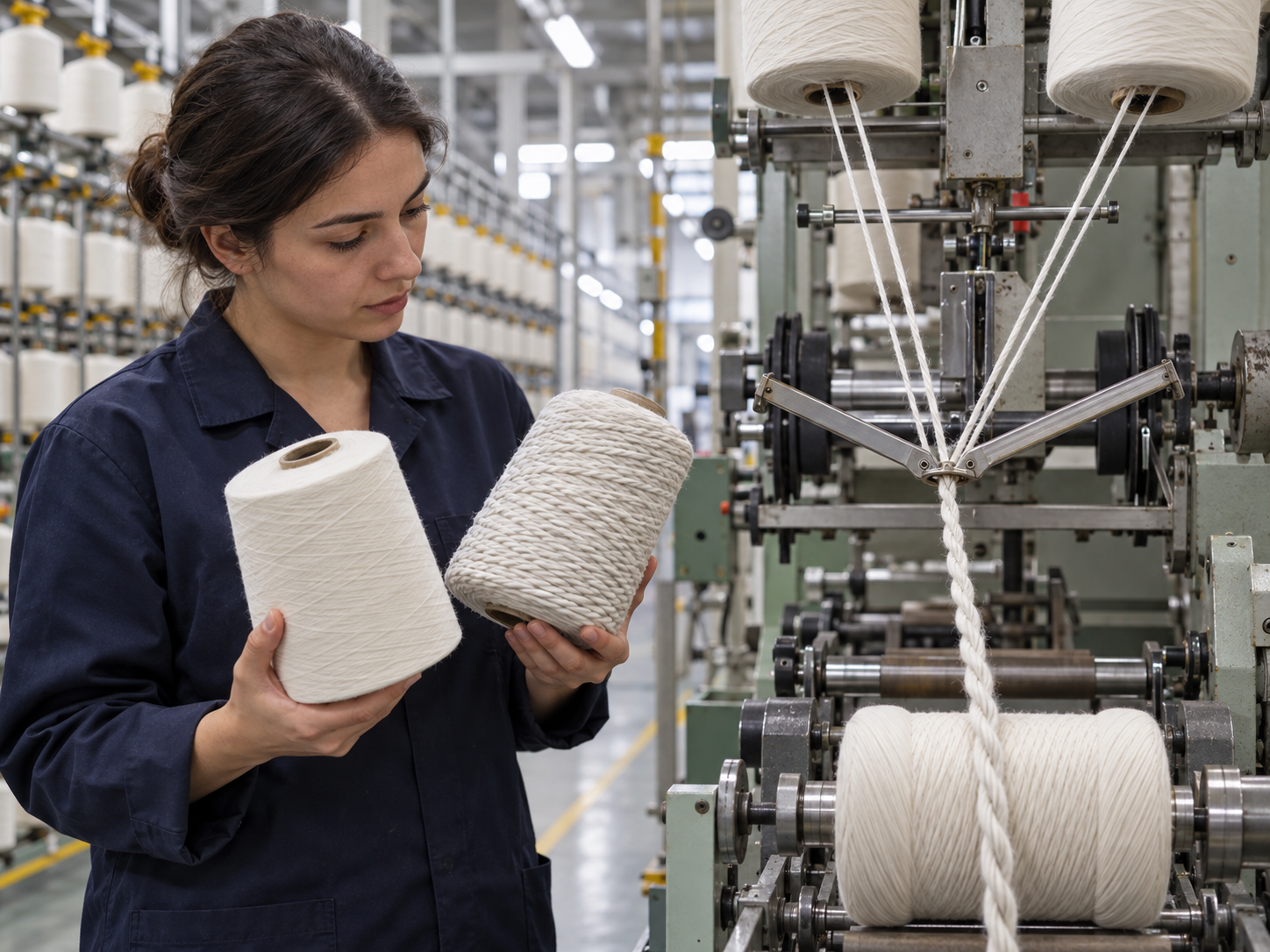
Production starts by choosing suitable canes based on dimensions and surface condition. Makers then prepare and bend structural members using appropriate forming techniques for their material. The curved base and seat bowl are assembled to controlled geometry, and joints are secured with the required bindings, fasteners or other structural connections.
Finishing involves smoothing contact surfaces, treating or coating the frame as appropriate, and checking visible edges. Inspection should establish whether the bowl fits the intended base, joints are secure and the completed chair is stable in normal use.
Hand production naturally produces some variation in appearance. That does not eliminate the need for repeatable dimensional and structural quality criteria. Cracked canes, loose joints and badly aligned supports are functional defects, not harmless handmade character. Manufacturers should distinguish decorative wrapping from load-bearing connections and retain a clear record of compatible components.
Comfort, Posture and Ergonomic Limitations
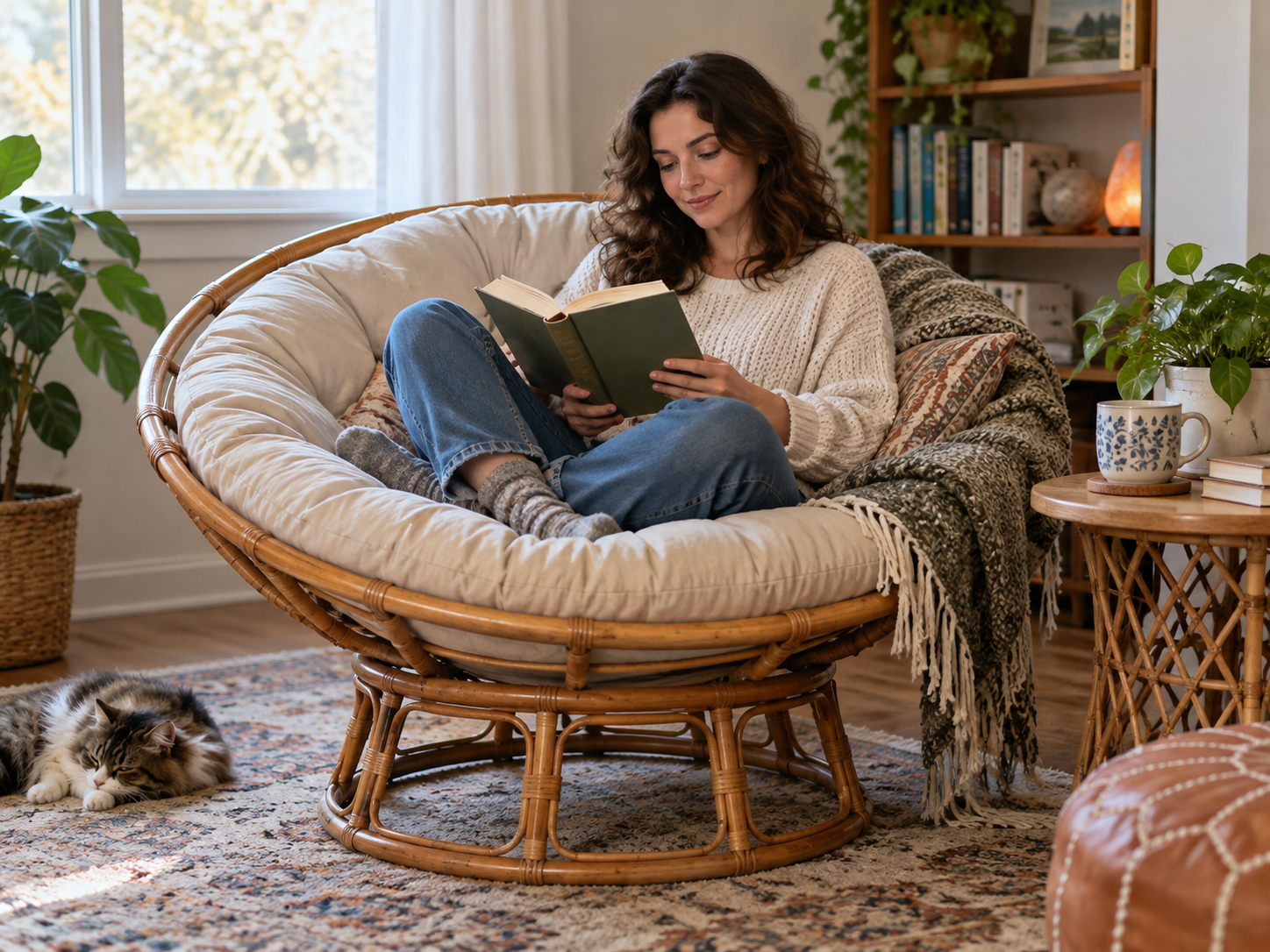
The enveloping bowl and substantial cushion make a papasan appealing for occasional lounging, conversation and reading. The perceived softness depends on cushion filling, upholstery tension and how an occupant settles within the curve.
A papasan is not automatically an ergonomic chair. Conventional examples lack the dedicated lumbar adjustment, height control and firm arm support of task seating. Deep seating may encourage a rounded-back posture or make standing difficult for some users. Very soft filling may permit the pelvis to sink unevenly, while a compressed cushion may no longer distribute pressure effectively.
Comfort must therefore be evaluated by body dimensions, posture, session length and ease of entry and exit. A papasan can be appropriate informal seating without being a substitute for an office chair designed for prolonged work. Where mobility, posture support or assisted standing are significant considerations, a firmer and more structured chair can be more suitable.
Principal Types and Modern Variations
The classic papasan pairs a round bowl with a separate base and circular cushion. The double papasan, or mamasan, has an elongated seat, demanding more space and support for the possible combined load of occupants. Metal-frame papasans reinterpret the curved form using industrial structural members. Synthetic-woven versions use artificial strands over a supporting frame, while compact papasan-style chairs may integrate the frame and support instead of following the traditional three-part construction.
Names alone are insufficient for specifying a chair. A large double seat should not be treated merely as a scaled single seat, because longer spans and combined loads change structural requirements. Folding or adjustable models may need specific locks or assembly steps. Product descriptions should disclose the actual construction, intended environment, seating capacity and appropriate component dimensions.
Cushions, Upholstery and Replacement Fit
The cushion strongly influences a papasan's comfort and appearance. Tufted forms often use polyester fiberfill, while other products combine foam, layered padding and sewn upholstery. Fiberfill can create a soft rounded shape but may compress or migrate; foam response depends on formulation and thickness. Neither is universally preferable.
Cover materials differ in feel and maintenance. Cotton blends, polyester upholstery, textured fabrics and plush surfaces require different care, depending on finishes and cushion construction. World Market identifies specific cushion compositions, fit requirements and spot-cleaning guidance for its products. Such instructions are product-specific, not universal.
Replacement cushions are not all interchangeable. Check the bowl's measured diameter, seat contour and the cushion's actual dimensions before ordering. Fit should protect users from rigid structural contact without creating interference. Removable covers or readily replaced cushions can extend the life of a usable frame, but machine washing must not be assumed safe unless the manufacturer allows it.
Safety, Structural Stability and Inspection
Stability depends on how loads pass through the bowl to the base and floor. Weight shifts, especially toward the rim, can challenge a poorly matched or unstable assembly. Inspect frame connections, floor contact, seat retention, loose wrapping, cracks and exposed fasteners. Product instructions should specify any required locking or positioning steps.
A design-specific safety incident helps explain the issue: in September 2008 the United States Consumer Product Safety Commission announced a recall of about 6,000 SmartSpace papasan chairs sold by Jo-Ann Stores because unlocked metal legs could cause a fall. That hazard applied to the recalled design and should not be generalized to every papasan.
Users should not climb onto the rim, deliberately rock an unsupported bowl or use a structurally damaged chair. Commercial buyers should obtain traceable specifications and evidence of relevant strength, durability and stability testing appropriate to their particular product rather than accepting an unsubstantiated universal compliance claim.
Using Papasan Chairs in Interior Spaces
The papasan works best as occasional lounge seating in reading corners, bedrooms and informal living areas. Its circular outline contrasts with rectilinear sofas and tables, while natural rattan contributes visible texture and craft character. A nearby side table and suitable light can make a modest reading area functional.
Space planning must account for the upper bowl, which may project beyond the base, as well as clearance for sitting down and standing up. The low seating position may be inconvenient for some users or in circulation routes. Stable flooring and adequate separation from obstacles are practical requirements.
Hospitality and shared-use environments create more intensive demands on the upholstery and joints. A residential papasan must not be assumed suitable for commercial occupancy. Natural-rattan models should be protected from weather unless the maker explicitly rates the complete chair and cushion system for outdoor conditions.
Cleaning, Maintenance and Repairs
Dust can accumulate along curved members and wraps, so routine gentle brushing or a suitable vacuum attachment helps preserve the frame. Finished natural rattan may be wiped according to the manufacturer's directions and dried promptly; prolonged soaking or strong chemicals may damage particular finishes or joints. IKEA gives damp-cloth and drying guidance for a related rattan armchair, but that product is not itself a traditional papasan.
Inspect cushions for compression, seam damage, stains and moisture. If permitted by their construction, rotation and redistribution of filling can improve evenness. Clean removable covers only by their specific care label.
Broken canes, loosened structural joints or instability need attention before further use. Cosmetic varnish cannot restore a compromised load-bearing member. Competent repair and separate replacement of a worn cushion can often extend useful life without discarding an otherwise sound frame.
Commercial Products and Historical Institutions
World Market documents contemporary papasan products with Indonesian bent-and-wrapped rattan frames and separately specified cushions. Its double papasan offerings also illustrate a distinct elongated construction. Wayfair describes the chair's conventional components and modern variants in its furniture guidance.
Pier 1 Imports was historically associated with the papasan in American retail culture, although historical influence alone does not verify any current product line. IKEA's BUSKBO demonstrates contemporary commercial rattan lounge-chair construction, but it should not be mislabeled as a conventional papasan.
Museum collections provide broader design context without asserting that every round rattan chair is a papasan. The Los Angeles County Museum of Art records Manila-manufactured rattan furniture associated with Paul T. Frankl. Such records help explain the international exchange of craft techniques and furniture forms. Commercial claims should distinguish an actual papasan manufacturer or retailer from an institution that documents related furniture history.
Sustainability and Future Product Development
Rattan is a plant-derived renewable material, but this alone cannot establish a finished chair's environmental performance. Harvesting practices, forest management, coatings, manufacturing energy, transport, cushion materials and useful product lifespan all matter. Synthetic upholstery, adhesives and metal components may complicate end-of-life separation and recycling.
A replaceable cushion and serviceable frame can support a longer useful life. Conversely, weak joints, unsuitable finishes and proprietary incompatible parts can make premature disposal more likely. A chair with a natural-looking surface is not necessarily biodegradable as a complete product.
Design improvements may include clearer component compatibility, stable base geometry, repairable joins, replaceable upholstery and transparent material sourcing. Combining rattan craft skills with reliable product testing and better serviceability offers a credible direction without abandoning the papasan's distinctive silhouette.
The Papasan Chair's Continuing Role in Furniture Design
The papasan chair demonstrates how furniture geometry, materials and craftsmanship combine to produce a recognizable type of seating. Its bowl-shaped frame and removable padded cushion encourage informal relaxation, while its supporting base and joints carry the essential structural loads. Appearance alone cannot establish safe performance. Proper component matching, frame inspection and stable positioning matter as much as the cushion's softness and the attractiveness of the finished chair.
The chair also reflects Southeast Asian rattan furniture traditions and their long relationship with international furniture markets. Contemporary interpretations in metal and synthetic materials widen the range of styles and potential applications, but they make accurate product labeling especially important. A wicker surface is not necessarily rattan, and a papasan-inspired saucer chair is not necessarily constructed like the classic three-piece design. The appropriate choice depends on planned use, expected loads, environmental conditions and user mobility.
Its continuing appeal lies in a balance between distinctive form and practical serviceability. Responsibly sourced materials, durable joints, replaceable cushions and clear cleaning guidance can support longer product life. Better design documentation and structural testing can improve confidence in modern versions while preserving traditional craft knowledge. For designers, buyers and furniture professionals, the papasan remains both an expressive lounge chair and a useful case study in how comfort, material behavior and responsible construction should work together.