Business
What is "Balance Sheet" - Definition & Explanation
Last Updated on: 10-Aug-2024 (1 year, 8 months, 23 days ago)
Help Us Grow

Balance Sheet Insights: Evaluate Assets, Liabilities, and Shareholders' Equity Today


balance-sheet
balance-sheet-1
balance-sheet-2

Balance Sheet: A Snapshot of a Company's Financial Position

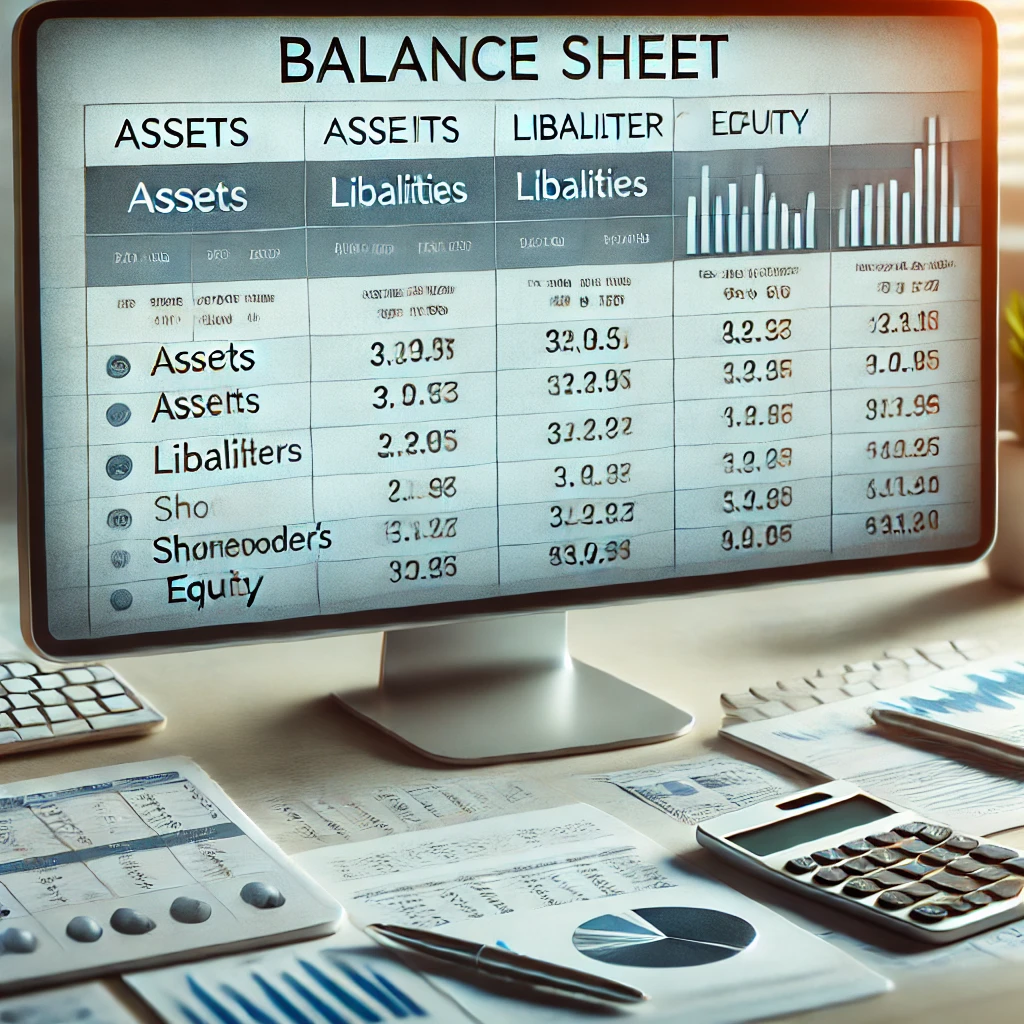
Understanding a company's financial health is essential for investors, creditors, and management alike. The balance sheet serves as a vital financial statement that provides a snapshot of a company's financial position at a specific point in time. It showcases the company's assets, liabilities, and shareholders' equity, offering valuable insights into its financial stability and operational efficiency.

The balance sheet is divided into three main sections:

  1. Assets: These are resources owned by the company that have economic value. Assets are typically classified as current assets, such as cash, accounts receivable, and inventory, which are expected to be converted into cash within a year, and non-current assets like property, plant, and equipment, which are long-term investments.

  2. Liabilities: These represent the company's obligations or debts owed to external parties. Liabilities include current liabilities, such as accounts payable and short-term loans due within a year, and long-term liabilities like mortgages and bonds payable over a longer period.

  3. Shareholders' Equity: Also known as owner's equity, this section reflects the residual interest in the assets of the company after deducting liabilities. It includes common stock, retained earnings, and additional paid-in capital.

The fundamental equation of the balance sheet is Assets = Liabilities + Shareholders' Equity. This equation must always balance, hence the name "balance sheet."

The importance of the balance sheet lies in its ability to provide stakeholders with a clear picture of the company's financial standing. Investors analyze the balance sheet to assess the company's net worth and financial leverage, aiding in investment decisions. Creditors examine it to evaluate credit risk and determine the company's ability to repay debts. Management uses balance sheet data to make strategic decisions about resource allocation, financing, and growth opportunities.

By examining the balance sheet, one can evaluate liquidity ratios, such as the current ratio, which measures the company's ability to meet short-term obligations. Solvency ratios, like the debt-to-equity ratio, assess long-term financial stability. These metrics are crucial for understanding the financial risks and operational efficiency of the company.

The balance sheet also provides insights into the company's asset management. For example, a high level of inventory might indicate potential issues with sales or excess stock, while significant accounts receivable might suggest challenges with collections.

In conclusion, the balance sheet is a critical financial statement that offers a comprehensive snapshot of a company's financial position. By detailing assets, liabilities, and shareholders' equity, it enables stakeholders to assess financial health, operational efficiency, and risk. Understanding and analyzing the balance sheet is essential for making informed decisions that drive business success.

— Diego CastroDiego Castro (Colombia) is an MSc student in Business Analytics at the University of the Andes. His research interests lie in data-driven decision-making and its impact on business growth. Diego has been part of several consulting projects, providing analytical insights to improve business operations.

Note: This content is for informational purposes only. Please read our full disclaimer for more details.

Some more terms:

Accounting Software: Streamlining Financial Management for Businesses

Accounting Software: Streamlining Financial Management for Businesses

26-Jun-2024 • by Ananya Mehta
Business

Accounting Software Simplifies Bookkeeping, Enhances Compliance, and Drives Growth In today's dynamic business environment, effective financial management is crucial for success. Accounting software...

Read about accounting software
Balance Sheet Insights: Evaluate Assets, Liabilities, and Shareholders' Equity Today

Balance Sheet Insights: Evaluate Assets, Liabilities, and Shareholders' Equity Today

10-Aug-2024 • by Diego Castro
Business

Balance Sheet: A Snapshot of a Company's Financial Position Understanding a company's financial health is essential for investors, creditors, and management alike. The balance sheet serves as a vital...

Read about balance sheet
Barcodes Boost Inventory Accuracy, Streamline Sales, and Maximize Profits

Barcodes Boost Inventory Accuracy, Streamline Sales, and Maximize Profits

27-Aug-2024 • by Yara Haddad
Business

Barcodes: Enhancing Inventory Management and Sales Efficiency In today's competitive business landscape, efficient inventory management and streamlined sales processes are critical for success....

Read about barcodes
Credit Notes Improve Customer Trust and Streamline Financial Accounting

Credit Notes Improve Customer Trust and Streamline Financial Accounting

20-Sep-2024 • by TGA Staff
Business

Credit Notes: Adjusting Invoices and Maintaining Accurate Financial Records In the realm of business transactions, maintaining accurate financial records is paramount. Credit notes play a crucial...

Read about Credit Notes

Add a definition
Add a definition for a textile term that you know about! Send us an email & tell us:
  • The term you want to define
  • Its definition in 500 words or less
  • Attach an image if necessary.
  • Optionally, tell us about yourself in 200 words or less!

Companies for balance sheet:
If you manufacture, distribute or otherwise deal in balance sheet, please fill your company details below so that we can list your company for FREE! Send us the following details:
  • Company name
  • Company address
  • Attach a logo, if necessary.
  • Optionally, tell us about yourself in 200 words or less!

Did you know this fact?
The United Kingdom is Europe's largest market for artificial intelligence in healthcare, with the UK healthcare AI market expected to reach ?2 billion by 2025.
(s) TextileGlossary.com Some rights reserved. • SitemapDisclaimer