Textile
What is "Ottoman" - Definition & Explanation
Last Updated on: 09-Sep-2024 (1 year, 7 months, 23 days ago)
Help Us Grow

Ottoman Fabric: The Perfect Blend of Elegance and Durability in Textiles


ottoman
ottoman-1
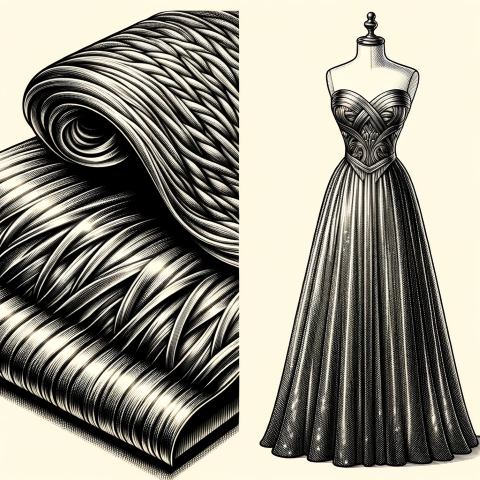
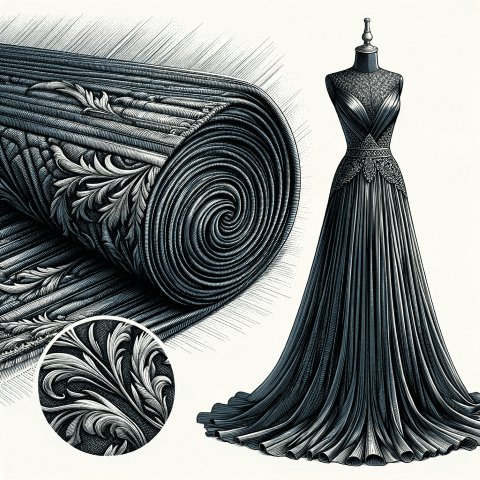
Ottoman fabric is a textile that originated in the Ottoman Empire, which is now modern-day Turkey. It is a heavy, closely woven fabric that has a unique ribbed or corded appearance, created by using a specific weaving technique. This technique involves interlacing warp and weft threads in a way that produces raised parallel cords or ridges across the surface of the fabric.

The cords or ridges of the Ottoman fabric run parallel to the fabric's selvedge, giving it a distinctive ribbed texture that is smooth and lustrous. Ottoman fabric can be made from a variety of fibers such as cotton, silk, wool, or synthetic blends, depending on the intended use of the fabric.

The Ottoman fabric has a rich history and was widely used in the Ottoman Empire for clothing, upholstery, and home decor. Today, it is still popular in many parts of the world and is used for a variety of applications, including clothing, upholstery, and drapery.

One of the unique properties of Ottoman fabric is its durability and strength. Due to its tight weave and ribbed texture, it is resistant to wear and tear and can withstand frequent use. It also has a beautiful drape, which makes it an ideal choice for drapery and upholstery applications.

Ottoman fabric is available in a range of colors and patterns, from simple solids to intricate floral and geometric designs. Its versatility and durability make it a popular choice for both traditional and contemporary styles.

In terms of care and maintenance, Ottoman fabric is relatively easy to clean and maintain. It can be machine washed or dry cleaned, depending on the fabric's composition and the specific cleaning instructions provided by the manufacturer.

In summary, Ottoman fabric is a heavy, closely woven textile with a unique ribbed or corded appearance that is created by using a specific weaving technique. It has a rich history and is still popular today for clothing, upholstery, and home decor applications. Its durability, strength, and beautiful drape make it a versatile and practical choice for a wide range of uses. Ottoman fabric is available in a variety of colors and patterns and can be easily cared for and maintained, making it an excellent choice for many different types of projects.
— Ishita VaidyaIshita Vaidya is a textile designer with 5 years of experience specializing in digital textile printing and fabric manipulation. A graduate of Pearl Academy, Ishita has a unique ability to blend traditional Indian motifs with contemporary patterns, creating designs that are both innovative and commercially successful. Her work has been featured in several high-profile fashion shows, and she is considered a rising talent in the textile design industry.
Ottoman
Originated in Turkey, this is a tightly woven, plain-weave, ribbed fabric with a hard, slightly shiny surface. The ribbed effect is created by weaving a finer silk or manufactured warp yarn with a heavier filler yarn, usually made of cotton, wool, rayon or waste yarn that is completely covered by the warp yarn, thus creating the ribbed effect. It is characterized by horizontal ribs and is heavier in weight and with a larger rib than both faille and bengaline. It has very pronounced flat ribs in the filling direction. Ribs are made by a cotton, worsted, silk, or rayon filling which does not show on either the face or the back, because the warp covers the filling entirely. It is called Ottoman Cord or Ottoman rib when a warp rib is employed. Fabric is stiff and cannot be gathered or shirred. Like other ribbed fabrics, it has a tendency to slip at the seams and crack, so it cannot be fitted too tightly. Another type of Ottoman with heavy ribbing is also found in Satin Weave.

— Neha KapoorNeha Kapoor is a textile professional with over 12 years of experience in textile merchandising and supply chain management. With a strong foundation in both the technical and creative aspects of textiles, Neha has worked with global brands to optimize their textile sourcing strategies. Her expertise in market analysis and trend forecasting has made her a valuable asset in the fast-paced world of fashion retail.

Note: This content is for informational purposes only. Please read our full disclaimer for more details.

Some more terms:

Cuprammonium Fluidity: Improving Fiber Strength and Drape in Fashion and Industrial Textiles

Cuprammonium Fluidity: Improving Fiber Strength and Drape in Fashion and Industrial Textiles

06-Sep-2024 • by Vikram Singh
Textile

Cuprammonium fluidity, also known as the cuprammonium process, is a method of producing high-quality regenerated cellulose fibers. The process involves dissolving cellulose in a cuprammonium solution...

Read about Cuprammonium Fluidity
Deluxing Explained: Elevate Your Fabric's Appearance with Advanced Techniques

Deluxing Explained: Elevate Your Fabric's Appearance with Advanced Techniques

30-Jul-2024 • by Tanya Bhatt
Textile

Deluxing Process: Discover How It Enhances Textile Quality and Durability Deluxing is a process used in the textile industry to enhance the appearance of finished textile products. It involves the...

Read about Deluxing
Pilling Problems? Discover Proven Strategies to Protect Your Fabrics

Pilling Problems? Discover Proven Strategies to Protect Your Fabrics

23-Jul-2024 • by Ishita Vaidya
Textile

Pilling is a common problem that occurs in textiles, particularly in fabrics that are made from synthetic or blended fibers. It is the formation of small balls of fiber on the surface of the fabric,...

Read about Pilling
Handle in Fabrics: Unlocking Consumer Insights for Textile Innovation

Handle in Fabrics: Unlocking Consumer Insights for Textile Innovation

22-Oct-2024 • by Simran Kaur
Textile

Handle in the Textile Industry: A Comprehensive Overview The concept of "handle" in textiles refers to the subjective tactile properties of fabrics, encompassing qualities such as roughness,...

Read about Handle
Add a definition
Add a definition for a textile term that you know about! Send us an email & tell us:
  • The term you want to define
  • Its definition in 500 words or less
  • Attach an image if necessary.
  • Optionally, tell us about yourself in 200 words or less!

Companies for Ottoman:
If you manufacture, distribute or otherwise deal in Ottoman, please fill your company details below so that we can list your company for FREE! Send us the following details:
  • Company name
  • Company address
  • Attach a logo, if necessary.
  • Optionally, tell us about yourself in 200 words or less!

Did you know this fact?
The US textile industry has a long history of collaboration with academia.
(s) TextileGlossary.com Some rights reserved. • SitemapDisclaimer