Share on X
Tomatoes and Farming: Maximizing Yield and Profitability in Agriculture
Tomatoes (Solanum lycopersicum) are one of the most widely cultivated crops in the world, playing a crucial role in the global agriculture industry. They are a rich source of vitamins, minerals, and antioxidants, making them a vital component of the human diet. Tomatoes are an essential crop in the agricultural sector due to their widespread consumption and economic significance. Originating in the Andean region of South America, tomatoes have evolved into a staple food item in various cuisines around the world. Their cultivation has expanded globally, with different regions adapting diverse varieties to suit local climates and consumer preferences. The versatility of tomatoes, in terms of usage in raw, cooked, and processed forms, further underscores their importance. The growth of the tomato industry has been driven by advancements in agricultural practices, including greenhouse farming, genetic modification, and organic farming. This section delves into the foundational aspects of tomato cultivation, highlighting its global impact on agriculture and society.
- Historical Significance:
- Tomatoes were first domesticated in Central and South America.
- They were introduced to Europe in the 16th century and quickly became an integral part of Mediterranean diets.
- Initially regarded with suspicion in Europe due to their association with the nightshade family.
- Global Cultivation:
- Tomatoes are now cultivated worldwide, from tropical to temperate climates.
- Major producers include China, India, the United States, and Turkey, which together account for a significant proportion of global production.
- Adaptation of various tomato varieties allows cultivation in diverse environmental conditions.
- Economic Importance:
-
- Tomatoes are a multi-billion dollar industry, influencing global food markets and economies.
- They are a critical source of income for small-scale and commercial farmers.
- Tomato products, including fresh tomatoes, canned tomatoes, and tomato paste, are major commodities in international trade.
Varieties of Tomatoes and Their Uses
Tomatoes come in a wide range of varieties, each tailored to specific uses and preferences. These varieties are classified based on characteristics such as size, shape, color, and taste. Varietal selection is crucial for farmers as it determines the crop's adaptability to different growing conditions, resistance to pests and diseases, and market demand. Understanding the different types of tomatoes helps in optimizing production strategies and meeting consumer needs effectively.
- Heirloom Tomatoes:
- Heirloom varieties are open-pollinated and known for their rich, unique flavors.
- Often grown for their diverse colors, shapes, and sizes, including pink, purple, yellow, and striped varieties.
- Preferred in organic and small-scale farming due to their genetic diversity and adaptability to local growing conditions.
- Hybrid Tomatoes:
- Developed through cross-breeding to enhance desirable traits such as disease resistance, yield, and uniformity.
- Examples include Roma, Beefsteak, and Cherry tomatoes.
- Hybrids often have a more consistent shape and size, making them popular in commercial agriculture and processing industries.
- Cherry and Grape Tomatoes:
- Small-sized tomatoes ideal for salads, garnishes, and snacking.
- Known for their sweet flavor and vibrant colors, ranging from red to yellow.
- Often grown in controlled environments like greenhouses for extended harvest seasons.
- Plum and Roma Tomatoes:
-
- Oblong-shaped tomatoes with thick flesh and fewer seeds.
- Ideal for sauces, pastes, and canning due to their low moisture content and rich flavor.
- Preferred by commercial growers for their high yield and processing qualities.
Tomato Cultivation Practices
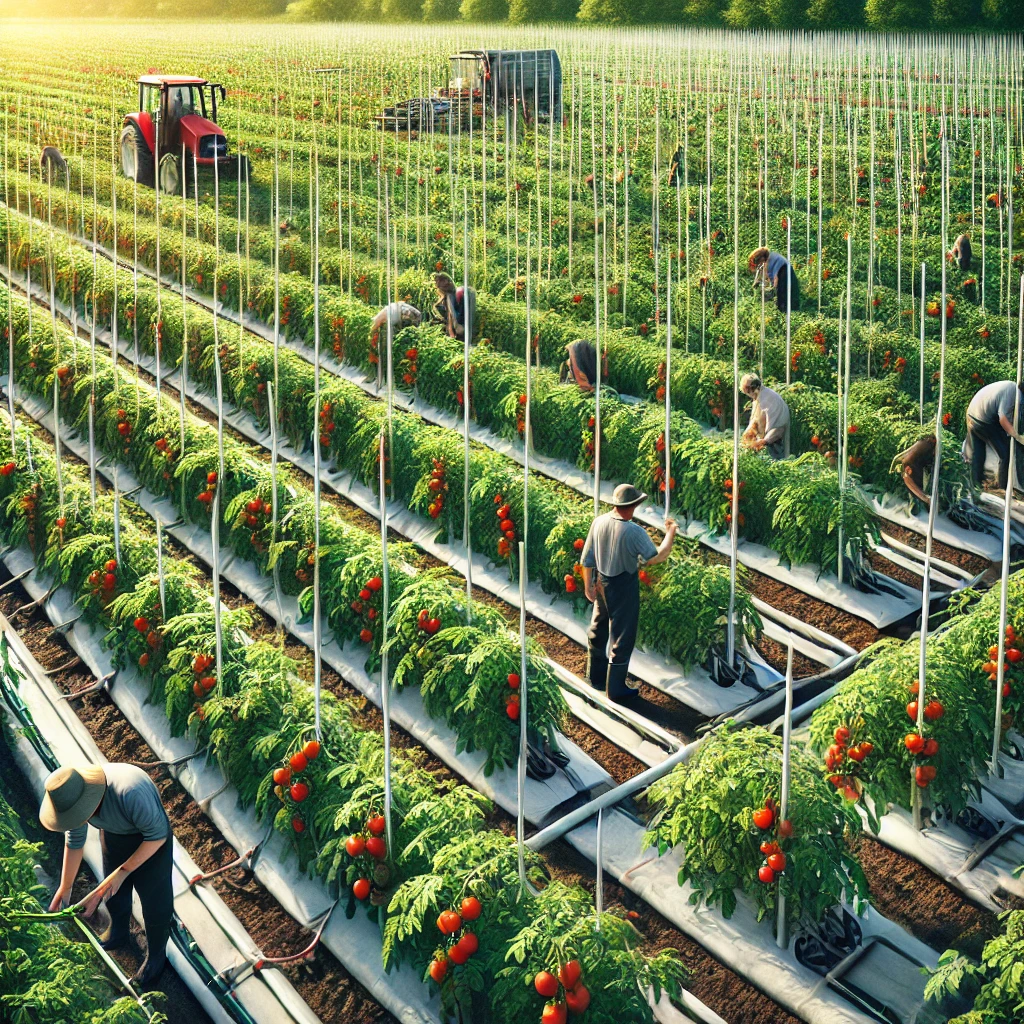
Effective tomato cultivation involves a range of practices aimed at optimizing yield and quality. These practices vary depending on factors such as climate, soil conditions, and available resources. With advancements in agricultural technologies, tomato farming has evolved from traditional open-field cultivation to more sophisticated methods like hydroponics and greenhouse farming. This section explores the best practices for tomato cultivation, emphasizing the importance of soil preparation, irrigation, pest management, and harvesting techniques.
- Soil Preparation and Fertilization:
- Tomatoes thrive in well-drained, loamy soil with a pH of 6.0 to 6.8.
- Soil preparation involves plowing and incorporating organic matter, such as compost or manure, to enhance soil fertility.
- Balanced fertilization with nitrogen, phosphorus, and potassium is essential for vigorous plant growth and fruit development.
- Planting Techniques:
- Tomatoes can be started from seeds or transplants, with the latter providing a head start in the growing season.
- Proper spacing is crucial to ensure adequate air circulation and reduce the risk of disease.
- Mulching helps conserve soil moisture, suppress weeds, and maintain an even soil temperature.
- Irrigation and Water Management:
- Consistent and adequate watering is vital, especially during flowering and fruiting stages.
- Drip irrigation is preferred for efficient water use and minimizing the risk of water-borne diseases.
- Overhead watering should be avoided as it can lead to foliage diseases and fruit cracking.
- Pest and Disease Management:
-
- Integrated Pest Management (IPM) combines cultural, biological, and chemical methods to control pests such as aphids, whiteflies, and nematodes.
- Disease-resistant varieties and crop rotation practices help mitigate the impact of common tomato diseases like blight, wilt, and mosaic virus.
- Regular monitoring and early intervention are crucial to prevent significant crop losses.
Economic Importance and Market Dynamics
Tomatoes hold significant economic value in the agriculture sector, influencing both domestic and international markets. As one of the most traded vegetables, tomatoes contribute substantially to the income of farmers, traders, and processors. Market dynamics, including price fluctuations, demand patterns, and trade policies, play a crucial role in the tomato industry's profitability. Understanding these factors is vital for stakeholders to navigate the complexities of tomato production and distribution.
- Market Demand:
- Tomatoes are in high demand due to their versatility in fresh consumption and processing into products like sauces, ketchup, and canned goods.
- Demand peaks in seasons aligned with traditional cuisine practices, such as summer for salads and winter for soups and stews.
- Consumer preferences for organic and locally grown tomatoes are reshaping market trends and pricing.
- Price Fluctuations:
- Tomato prices are highly volatile, influenced by factors like weather conditions, crop yield, and supply chain disruptions.
- Seasonal production leads to price surges during off-seasons and gluts during peak harvest times.
- Market interventions, such as government subsidies and price support mechanisms, aim to stabilize prices and ensure fair returns to growers.
- International Trade:
-
- Major exporting countries include Mexico, the Netherlands, and Spain, serving markets in North America and Europe.
- Trade agreements and phytosanitary regulations impact the global trade of tomatoes, affecting market access and competitiveness.
- Processed tomato products, such as paste and canned tomatoes, form a significant portion of international trade, with value addition creating economic opportunities.
Pest and Disease Management in Tomato Cultivation
Pest and disease management is a critical component of tomato cultivation, given the susceptibility of tomatoes to various biotic stresses. Pests such as aphids, whiteflies, and nematodes, along with diseases like blight, wilt, and mosaic virus, can cause substantial yield losses if not managed effectively. Integrated Pest Management (IPM) is the cornerstone of sustainable pest control, employing a combination of cultural, biological, and chemical methods. This section provides an overview of the common pests and diseases affecting tomatoes and outlines strategies for their effective management.
- Common Pests:
- Aphids: Small, sap-sucking insects that can transmit viral diseases, leading to stunted growth and reduced yield.
- Whiteflies: Insects that cause direct damage by feeding on plant sap and act as vectors for tomato yellow leaf curl virus.
- Nematodes: Microscopic worms that attack roots, causing galls, reduced water uptake, and poor plant growth.
- Common Diseases:
- Late Blight: A fungal disease characterized by dark, water-soaked lesions on leaves, stems, and fruit, thriving in cool, moist conditions.
- Fusarium Wilt: Soil-borne fungus that causes yellowing and wilting of leaves, often leading to plant death.
- Tomato Mosaic Virus: Causes mottled leaves and distorted fruit, spreading through contaminated soil, tools, and hands.
- Management Strategies:
-
- Cultural Control: Crop rotation, use of disease-free seeds, and proper sanitation practices reduce the incidence of pests and diseases.
- Biological Control: Beneficial organisms like ladybugs, predatory mites, and parasitic wasps help control pest populations naturally.
- Chemical Control: Pesticides and fungicides are used judiciously, following recommended guidelines to minimize resistance development and environmental impact.
Post-Harvest Handling and Processing of Tomatoes
Post-harvest handling and processing are vital to preserving the quality and extending the shelf life of tomatoes. Proper post-harvest practices minimize losses due to spoilage, ensuring that tomatoes reach consumers in optimal condition. Processing adds value to the crop by transforming it into a wide range of products, including canned tomatoes, sauces, and dried tomatoes. This section discusses key aspects of post-harvest handling and processing, highlighting their importance in the tomato supply chain.
- Harvesting:
- Tomatoes should be harvested at the appropriate maturity stage, depending on their intended use (fresh market or processing).
- Harvesting should be done during the coolest part of the day to reduce heat stress on the fruit.
- Careful handling during harvesting prevents bruising and damage that can lead to post-harvest losses.
- Post-Harvest Handling:
- Cleaning: Tomatoes are washed to remove dirt, pesticides, and pathogens, using sanitized water to prevent contamination.
- Sorting and Grading: Tomatoes are sorted based on size, color, and quality to meet market standards and consumer preferences.
- Storage: Temperature-controlled storage reduces the rate of ripening and extends the shelf life of tomatoes, with optimal storage temperatures ranging between 10-15°C.
- Processing:
-
- Canning: Canned tomatoes are preserved in brine or sauce, providing a convenient and long-lasting product for consumers.
- Sauces and Ketchup: Processing tomatoes into sauces and ketchup adds value and creates diverse market opportunities.
- Drying: Sun-drying or dehydration concentrates flavor and preserves tomatoes for use in culinary applications like salads and pizzas.
Tomatoes in Sustainable Agriculture
The role of tomatoes in sustainable agriculture has gained prominence in recent years. Sustainable tomato farming practices focus on reducing environmental impact, conserving resources, and enhancing biodiversity. These practices include organic farming, integrated pest management, and the use of renewable energy sources in production processes. The adoption of sustainable practices not only benefits the environment but also meets the growing consumer demand for eco-friendly and health-conscious food products.
- Organic Tomato Farming:
- Utilizes natural inputs like compost, organic fertilizers, and biological pest control methods to maintain soil health and biodiversity.
- Avoids synthetic pesticides and fertilizers, reducing environmental pollution and promoting safer, healthier produce.
- Certified organic tomatoes often command higher prices, providing economic incentives for farmers.
- Water Conservation:
- Efficient irrigation methods, such as drip irrigation and rainwater harvesting, help conserve water and reduce the crop's water footprint.
- Mulching and cover cropping techniques minimize water evaporation and soil erosion, enhancing soil moisture retention.
- Drought-tolerant tomato varieties are being developed to adapt to changing climate conditions and reduce water dependency.
- Renewable Energy Use:
-
- Solar-powered irrigation systems and greenhouses reduce reliance on fossil fuels, lowering the carbon footprint of tomato cultivation.
- The use of renewable energy sources aligns with global sustainability goals and contributes to the development of resilient food systems.
- Circular farming approaches, such as recycling organic waste into biofertilizers, enhance resource efficiency and promote sustainable agriculture.
The Ever-Evolving Role of Tomatoes in Agriculture
Tomatoes continue to be a dynamic and integral part of the agriculture industry. Their global significance extends beyond culinary uses to encompass economic, social, and environmental dimensions. As the industry evolves, the focus on sustainable production practices and advanced cultivation techniques will shape the future of tomato farming. By addressing the challenges of pest and disease management, market dynamics, and post-harvest handling, stakeholders can ensure the continued success and resilience of the tomato sector.
The journey of the tomato from its historical roots to its current prominence in agriculture underscores its adaptability and importance. With ongoing research and technological advancements, tomatoes will remain at the forefront of agricultural innovation. The drive for sustainability, coupled with consumer demand for high-quality produce, will continue to propel the tomato industry toward a more resilient and prosperous future.